





By Kelsey Blaylock
Safety is an important aspect when it comes to driving in unsafe weather conditions such as ice and snow, or even a combination of both. That’s why many drivers that plan on experiencing slick roads annually, purchase vehicles with either all-wheel drive (AWD) or four-wheel drive (4WD).
Both installed systems have the same outcome, which is to increase traction control. They both disperse a constant rotating force on all four wheels, the main thing is: one has more control over the other one.
The AWD system is automatically turned on when low-traction is detected, which saves the driver the hassle of turning it on themselves. Another positive feature when using the AWD system is Action Drive, which saves fuel because it only distributes that extra force to tires when necessary.
AWD systems are found in many vehicles such as the Jeep Cherokee, Grand Cherokee, Compass, Renegade, and the Dodge Charger and Challenger.
When it comes to utilizing the 4WD system, the driver makes the decision of when it is necessary to be turned on. In order for this system to maximize the traction, the driver must push a button or pull a lever to be engaged.
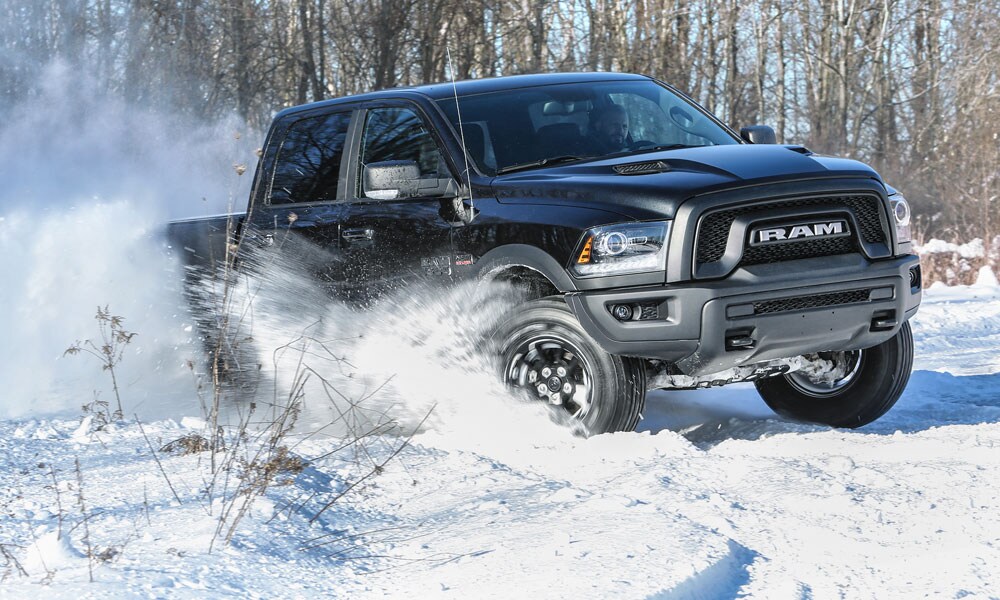
This part-time, 4WD system is usually found in truck-based, or heavy-duty type vehicles such as the Jeep Wrangler, or Ram 1500. When the 4WD is engaged by driver, the torque is shared half and half between the front and rear axle. An option to always keep the 4WD system running is included in the Ram 1500.
Either system that the driver desires, whether it’s the AWD or 4WD, ensures a safer trip to your destination with access to maximum use of traction.
Even though both of these systems increase safety on slick roads, it does not have capability of stopping your vehicle. Adjust your speed due to the road conditions, brake early, and expand gaps between vehicle in front of you.
Drive safely this season, and all seasons, in all weather. Stop by O’Daniel CDJR today.
Categories:
News